

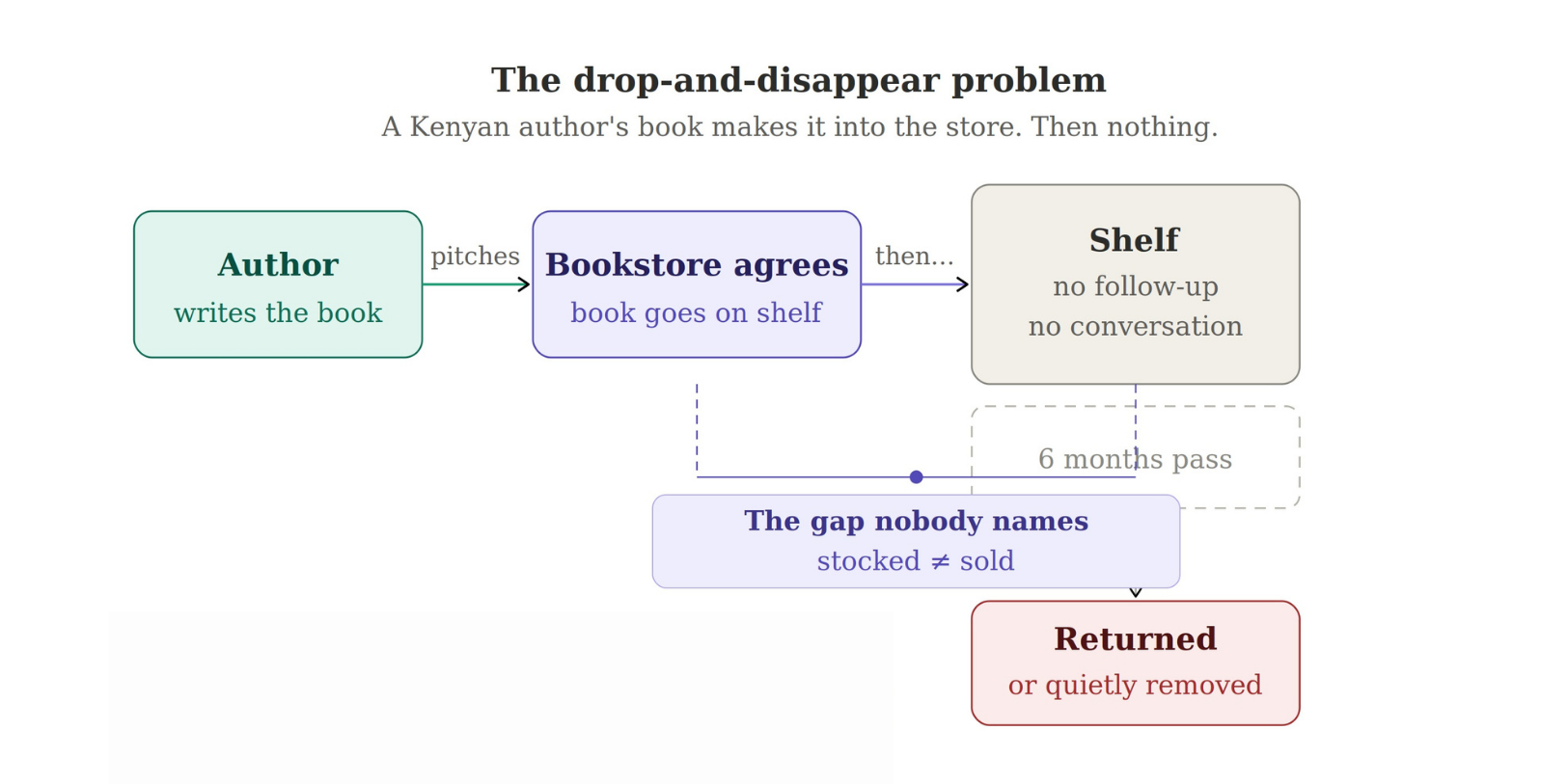
Kenyan authors are leaving their books to die on shelves, not because bookstores fail them, but because they never learned that delivering a box is only the beginning.
Here is what most Kenyan authors do: they negotiate a consignment arrangement with a bookstore, deliver a stack of their books, feel a surge of accomplishment, and then they disappear. They go back to writing, or to their day jobs, or to posting about their books on Instagram. They do not follow up. They do not check in. They do not ask how the books are selling or where exactly on the shelves they have been placed.
And bookstores, for their part, keep receiving new books. Every week, new titles arrive, from international publishers, from distributors, from other local authors doing exactly the same thing. The shelving logic is simple and brutal, that is what an bookstore worker told me: newer books go where eyes go.
The Migration of A Forgotten Book
| Month 1 — Feature table | High visibility |
| Month 2 — Main shelves, eye level | Moderate |
| Month 3 — Lower shelves | Low |
| Month 4+ — Back corner | Invisible |
Your book, the one you left three months ago, gets migrated. First from the feature table to the main shelves. Then from eye-level to knee-level. Then from the accessible section to the back corner near the stockroom door, where the lighting is bad and nobody lingers.
Your book is not being sold. It is being stored. There is a difference, and it costs you.
This is not a story about bad bookstores. It is a story about authors who misunderstand what placing a book on consignment actually means. Consignment is not distribution. It is not marketing. It is not a relationship. It is an agreement that says: here is a product, try to sell it. The rest, – the visibility, the conversation, the follow-through, is still yours to manage.
What presence actually looks like
Having my books at Kibanga Bookstore has taught me one thing clearly: the relationship cannot be passive.
I’ve used them for content creation. I’ve proposed collaborations. I’ve attended their events. I’ve shown up, consistently , and it has mattered. In 2025, two of my titles made it to their top 50 best-sellers, this April, one of my books was selected as their Book of the Month, chosen to be read by their 15–20 member book club on the 26th. This isn’t a casual reading group, each member pays Ksh 1,000 annually as a commitment fee, so these are serious, intentional readers. That makes the selection mean even more. It’s led to sales, and I’m following up to get reviews from club members after the session, and hoping this is just the first of my books to be featured.
Another most effective thing I’ve done is ask Kibanga Bookstore to tag or collaborate with me whenever they create content featuring my books. Those posts consistently pull their highest views and when I repost, share, and add context about the book in the comments, the ripple effect is real: visits to my website, clicks through to the checkout page, and actual purchases.
Look out for book clubs and individuals hosting book events too. Not every opportunity comes through a bookstore directly. Some book clubs are actively looking for local titles to read and discuss, and some book lovers who host their own events, pop-ups, or literary gatherings are happy to feature your book to their audience, giving it real visibility among people who already love reading. Don’t wait to be discovered, reach out. I have a book event coming up this April and another in June, both of which came through connections with book lovers from Kibanga Books’ community of 16.9K followers. That network is not just a follower count; it is a community of readers. Tap into it.
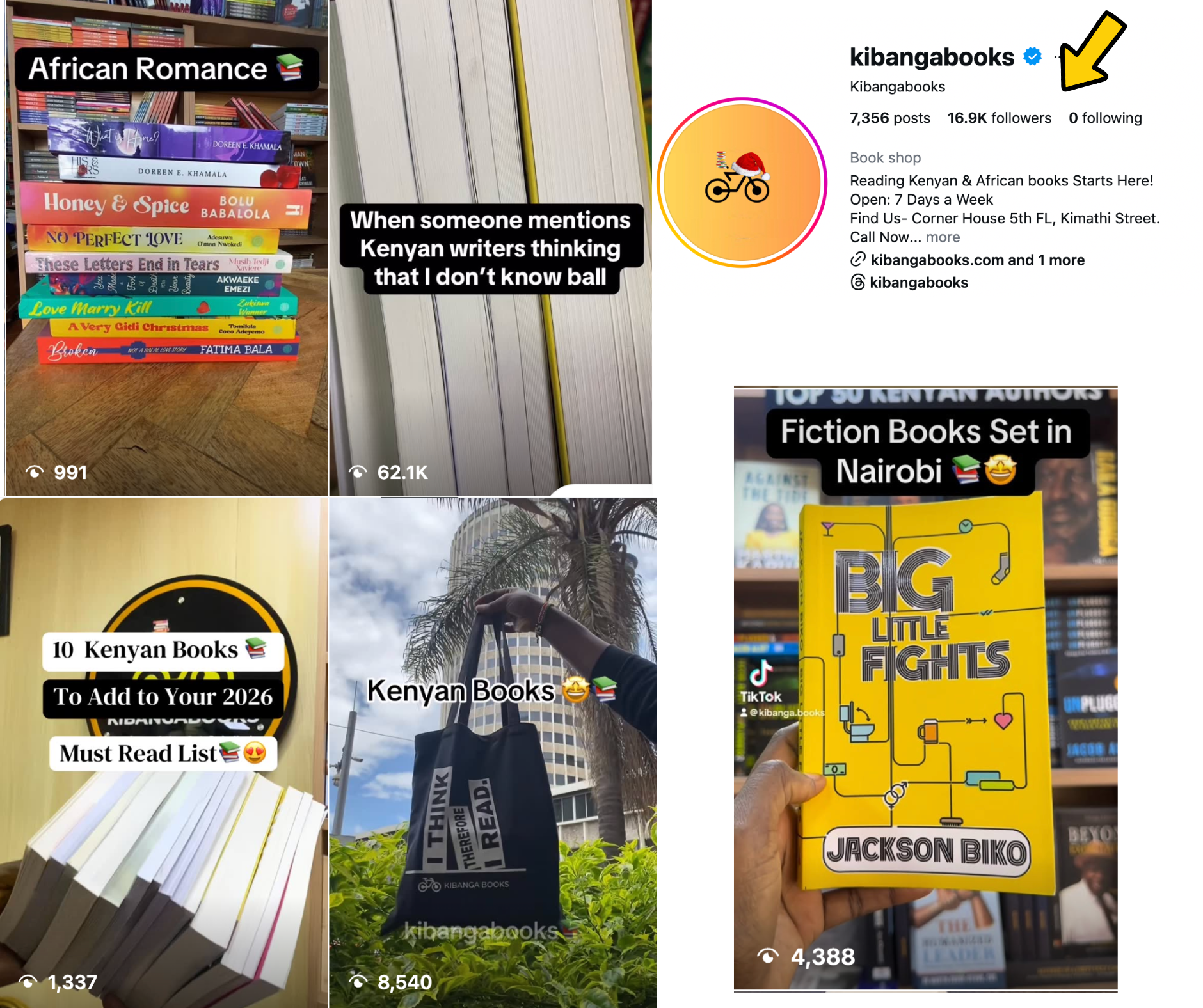
That did not happen because I left a box of books and hoped for the best. It happened because I was present, consistent, and treated the bookstore as a partner rather than a deposit point.
But I’m just one author, working with a single bookstore, and the system is still failing most of us. The same drop-and-disappear pattern repeats from one author and bookstore to the next, largely because no one explained to us, especially debut writers without agents or publicists, that placing a book in a store and actually selling it are two completely different challenges.
What authors can do now
- Check in with your bookstore at least once a month. Ask where your book is shelved and how it is selling
- Attend the bookstore’s events. Show up as an audience member before you show up as a speaker or for your own bookstore event like book signing, book publicity tour etc
- Tag/collaborate the bookstore when posting about your book online. Drive foot traffic to them, not just awareness of yourself. Think about it: Kibanga Bookstore has 16.9K followers, and a good number of those are exactly the readers you’re trying to reach. Meet them where they already are, on a page they already trust and visit regularly.
- Ask what the store needs — reading groups, speakers, shelf notes. Be useful to them first.
- Propose a collaboration — an event, a bookmark, a curated display like your banner in their store, that serves both of you.
None of this is glamorous. None of it feels like writing. But authorship, in the commercial sense, has always been two jobs: making the book, and then refusing to abandon it once it exists in the world.
The bookstores are not the enemy of Kenyan literary culture. They are, for most readers in this country, the only access point. What they need from local authors is not just inventory. They need partners who show up, who treat the shelf not as a resting place for a dream already achieved, but as a starting line. You reach their audience. They amplify yours. Done right, it’s one of the cleanest partnerships in publishing.






2 Comments
This is an eye opening. Thanks for sharing.
Hehehe. This is me. Guilty.