
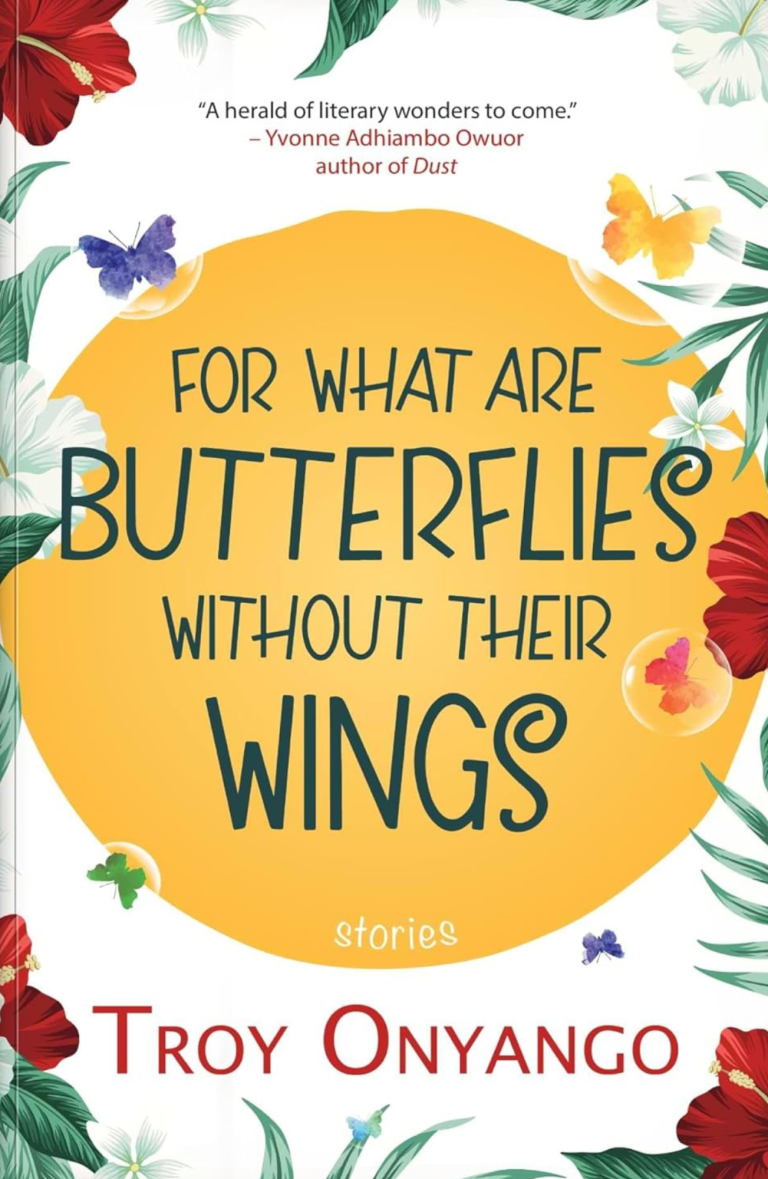
Troy Onyango’s For What Are Butterflies Without Their Wings is a collection of twelve short stories that have a quickening pulse and pages crackling with sharp observations and gentle revelations about love, loneliness, loss, longing, and the infinite intricacies of daily human life.
In the opening story, The Transfiguration a trans woman tries to find herself and a sense of belonging in the unkind streets of Nairobi. A sister relives two decades of sibling rivalry when the brother disappears in a lake in the titular story For What Are Butterflies Without Their Wings. Two friends grow apart as they grow older and realise their paths diverge in Goodbye, So Long.
In these beautiful stories that straddle the breadth of Kenya, Troy’s characters navigate the daily lived experiences that shape them, as they learn to cobble together an existence alongside a society with rules that do not quite fit.
About the author



1 review for For What Are Butterflies Without Their Wings (Contemporary African literary fiction)
Doreen Khamala –
There’s a boldness to the way Troy Onyango opens this collection. A narrator sitting with a letter they can’t bring themselves to send, a woman in apartment 4B who doesn’t want to be saved, a son who calls his mother to say he is becoming a woman. You are immediately in the hands of a writer who trusts his readers, and that trust is earned.
This is a short story collection rooted in Kenya, in Nairobi’s streets and sounds, in the weight of family, in bodies navigating desire, gender, grief, and survival. Onyango moves across voices with real confidence. Stories shift between second and first person, between letters and fragments, between the intimate and the vast. The prose has texture. It is vivid without being showy, and there is a lyricism here that never tips into self-indulgence.
What strikes you most is how much Onyango trusts the small, specific detail to carry enormous weight. A trans woman writing a letter she crumples into a ball. A man at thirty-five who has learned to bend himself into shapes that fit other people. A mother who sings, just sings, and silences a whole room that has been laughing at her. These moments land because the writing around them is so precisely controlled.
The collection is also deeply aware of the body, its pleasures, its vulnerabilities, the way it is read and misread by others. This is writing that refuses to flinch.